
Why Annual Marine Air Conditioning Maintenance Saves Yacht Owners Thousands


Your yacht's air conditioning system is one of the hardest-working systems onboard. During the hot and humid summers in Baltimore, Annapolis, and throughout the Chesapeake Bay, a properly maintained marine air conditioning system keeps your crew comfortable while protecting valuable onboard electronics, woodwork, and interior finishes from excessive heat and humidity.
Unfortunately, many boat owners wait until their air conditioning stops working before calling for service. By then, a simple maintenance visit has often turned into an expensive repair.
Why Preventative Maintenance Matters
Marine air conditioning systems operate in one of the harshest environments imaginable. Saltwater, marine growth, vibration, humidity, and continuous operation all contribute to wear and tear on the equipment.
Routine preventative maintenance helps identify small problems before they become major failures. A professional inspection can reveal restricted seawater flow, dirty condensers, refrigerant leaks, failing circulation pumps, electrical issues, or worn components before they leave you without cooling.
Common Problems We Find
At Tide & Iron Yacht Systems, some of the most common marine HVAC issues we encounter include:
Dirty seawater strainers restricting water flow
Fouled condensers caused by marine growth
Weak or failing raw water pumps
Refrigerant leaks
Corroded electrical connections
Failed capacitors and contactors
Clogged air filters reducing airflow
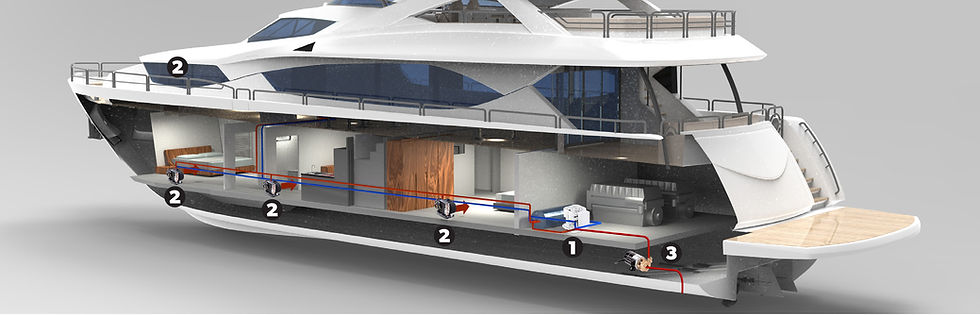
Improper chilled water flow on larger yacht systems
Most of these issues develop slowly and often go unnoticed until the system begins tripping on high pressure, loses cooling capacity, or shuts down completely.
Protect Your Investment
Modern yachts often rely on sophisticated chilled water air conditioning systems with multiple air handlers, variable-speed pumps, electronic controls, and integrated monitoring systems.
Routine maintenance helps:
Improve cooling performance
Lower energy consumption
Extend compressor life
Reduce unexpected breakdowns
Maintain cabin comfort
Protect expensive HVAC equipment
Increase overall system reliability
For vessels that spend long periods in marinas around Baltimore and Annapolis, regular service is especially important due to warm water temperatures and marine growth during the summer months.
Signs Your Marine Air Conditioner Needs Service
Don't ignore these warning signs:
Reduced cooling performance
High humidity inside the cabin
Frequent high-pressure alarms
Water leaks around the unit
Ice forming on evaporator coils
Loud pump or compressor noises
Poor airflow from supply vents
System short cycling
Addressing these symptoms early can often prevent major repairs.
Professional Marine HVAC Service in Baltimore
Tide & Iron Yacht Systems specializes in marine air conditioning repair, marine refrigeration service, chilled water systems, watermakers, and marine ice makers throughout Baltimore, Annapolis, and the Chesapeake Bay.
With more than 20 years of marine HVAC/R experience, we provide expert diagnostics, preventative maintenance, equipment installation, and emergency repairs for luxury yachts, sportfishing boats, sailing vessels, and commercial marine applications.
Whether your vessel uses a self-contained marine air conditioner or a complex chilled water system, our goal is to keep your equipment operating reliably so you can spend more time enjoying the water and less time dealing with unexpected repairs.
Schedule Your Marine Air Conditioning Service
Preventative maintenance is one of the smartest investments you can make in your yacht. Regular inspections help improve reliability, extend equipment life, and reduce costly breakdowns.

Comments